Three years ago, we led Mistral’s inception round on a simple thesis: Europe could produce world-class AI and a credible alternative to American models. Fast forward to today, and perhaps unsurprisingly in hindsight, the world has changed dramatically.
AI moved from research demos to production systems, pulling compute demand along with it. Sequential LLM API calls stitched together with chain-of-thought prompting became agentic workflows and coding copilots deployed at scale, workloads with an appetite for compute that very few anticipated three years ago.
At the same time, the global model landscape has been redrawn. Chinese labs have emerged as prolific contributors to leading open-source models. The question of whether a real business can be built on open weights has gone from an open-question to undeniable. Meanwhile, inside many enterprises and leading frontier labs, the realization has set in that true AI diffusion and productivity gains won’t come from APIs alone; it will require AI engineers embedded in the day-to-day of customers building alongside them.
Through it all, Mistral’s vision has felt prescient. With a ruthless focus on enterprise deployment, the team has zeroed in on what they’ve seen matter most to customers: operational control, choice of intelligence, assured access to compute and hands-on support for AI diffusion.
That’s why we’re proud to have backed them in every round since inception, including this $3.5B Series D, and why we remain honored to be their largest investor.
How Mistral’s Bets Tracked the AI Market
1. Efficient Deployment as the Product
Mistral focused on real-world usability. They released Mistral 7B and Mixtral 8x7B early, demonstrating that smaller, efficient models could outperform larger, closed alternatives. Tools like Ministral, Mistral OCR and Voxtral doubled down on pragmatism, giving developers production-ready solutions at a fraction of the cost of alternatives. As many in the ecosystem audited the cost of AI and investigated routing as a credible option, Mistral had already been working towards providing the highest intelligence at the lowest cost for their customers. This enabled customers to build their own model on Mistral’s stack, tuned on their data, under their control.
2. Compute as a Strategic Asset
Mistral saw early that control over AI infrastructure, not just the model, would define the next phase. In a region without homegrown hyperscalers with global demand, Mistral has been building the capacity and infrastructure to ensure Europe doesn’t just consume AI but also owns it.
While their recent partnership with Microsoft ensures global scalability, their European Compute Units (ECUs) are aggregating long-term commitments from anchor enterprises to secure capacity at a scale no single participant could secure alone. This is a first for the continent and a genuinely smart move in a region where compute has historically been imported. By converting demand into infrastructure, Mistral is directly shaping what capacity gets built, where it’s located and whom it serves.
This will hopefully give Europe the scale and compute it needs to compete globally.
3. Open Models as a Competitive Edge
From the very beginning, the Mistral founders made a bet on open-source not as a principle but as a strategic advantage. Open weights give enterprises the ability to see inside a model, adapt it and retain the intelligence they build with it. Mistral’s earliest releases put open weights in the hands of millions of developers and as open models have continued to fast-follow (and in some respects lead) the frontier, the Mistral team has extended this openness beyond their own models. With third-party models such as Z.ai’s GLM-5.2, Mistral’s platform aims to become the neutral place to run open intelligence. This is a natural evolution of the original vision: open models should be seen as a dynamic, living, interoperable ecosystem.
Why We’re Reinvesting
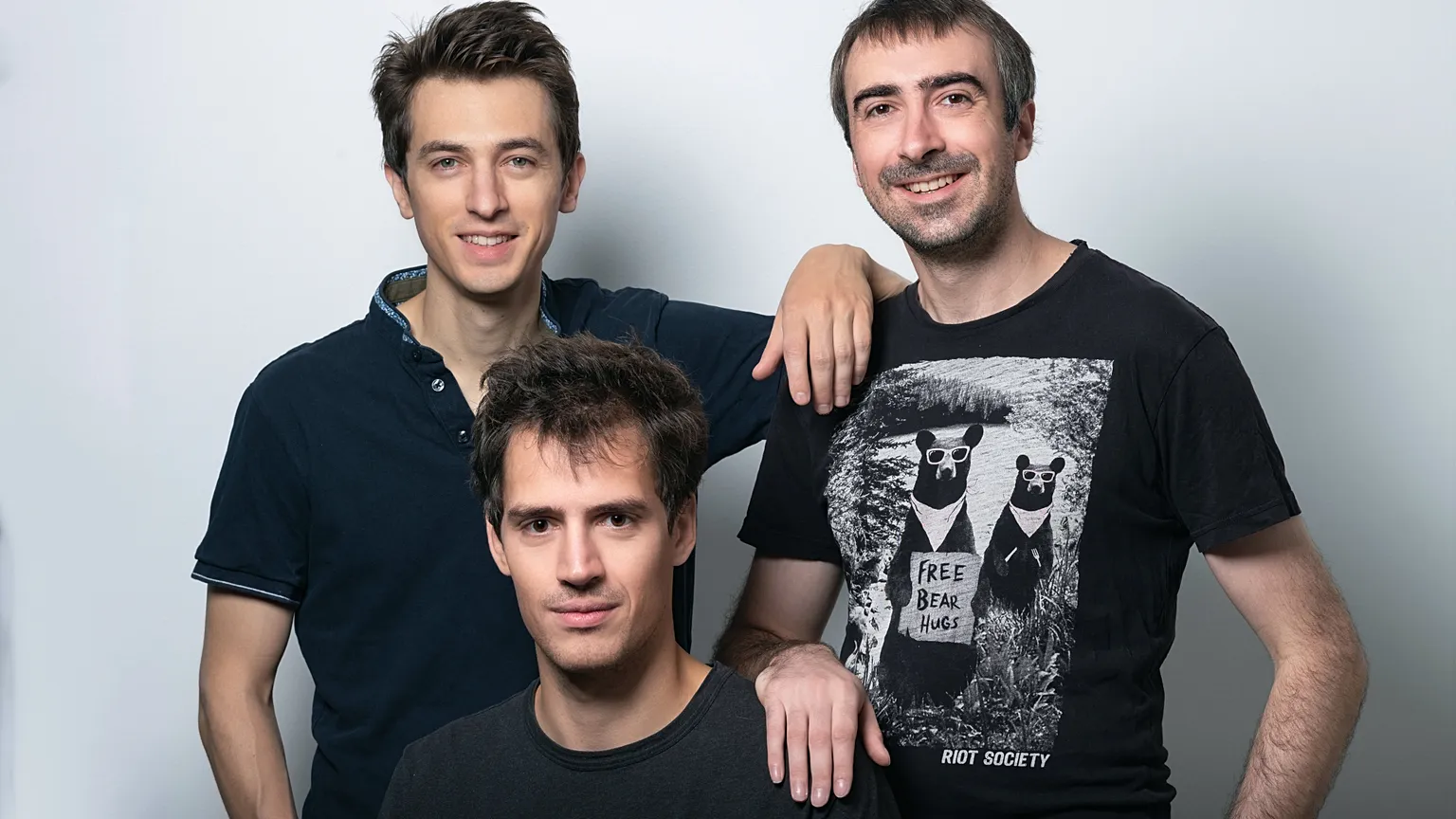
Arthur, Guillaume, Timothée saw where AI was going and built the infrastructure to get there, brick by brick (token by token?). They proved an open-weight strategy could underpin a global AI business, anticipated the rise of sovereign AI and executed with relentless speed.
As AI enters its next phase, we’re convinced the winners won’t be defined exclusively by the biggest models but rather, by their ability to orchestrate an ensemble of capabilities and deploy them securely, at scale, inside the global enterprises that run the economy. We believe Mistral’s focus on open models, embedded deployment and sovereign compute puts them in a leading position.
We’re proud to be participating in the largest private financing in Europe’s history as Mistral continues to build a global AI leader, offering a rare alternative in an increasingly multi-polar world order.
Authors